Top Mark Capital · 2026 Q1
Partner Letter
A detour, not damage.
Dear Friends,
Each quarter, Jason and I write a letter to our Partners. This one I wanted to share more widely — with the friends and readers who follow how we think.
I first started investing in college. Not in stocks, but in cars. A family friend named Rodney owned a small dealership in North Carolina, and he suggested I sell the pickup truck I'd worked so hard to afford. Take that money, he said, and buy two cars: one to drive, and one to sell. Buy something you can fix up or market better and sell for more than you paid. This was my first real foray into value investing, even if I didn't know the term yet.
I mainly specialized in what Rodney called twenty-footers. Classic cars from the '60s and early '70s that you could drive and enjoy and looked pretty good from twenty feet away. He had three mostly reliable resources: an interior guy, a mechanic, and a paint guy. Between them, we could get nearly any car road-ready and have a reasonable estimate of what it would cost. Over three or four years, I bought and sold thirty to forty cars this way.
Around this time, eBay and digital photos were both just taking off. When it became possible to list cars with photos — even grainy, low-resolution photos — it was revolutionary. Previously, people bought cars by driving to see them parked on a dealer's lot. With eBay, I could browse from my dorm room.
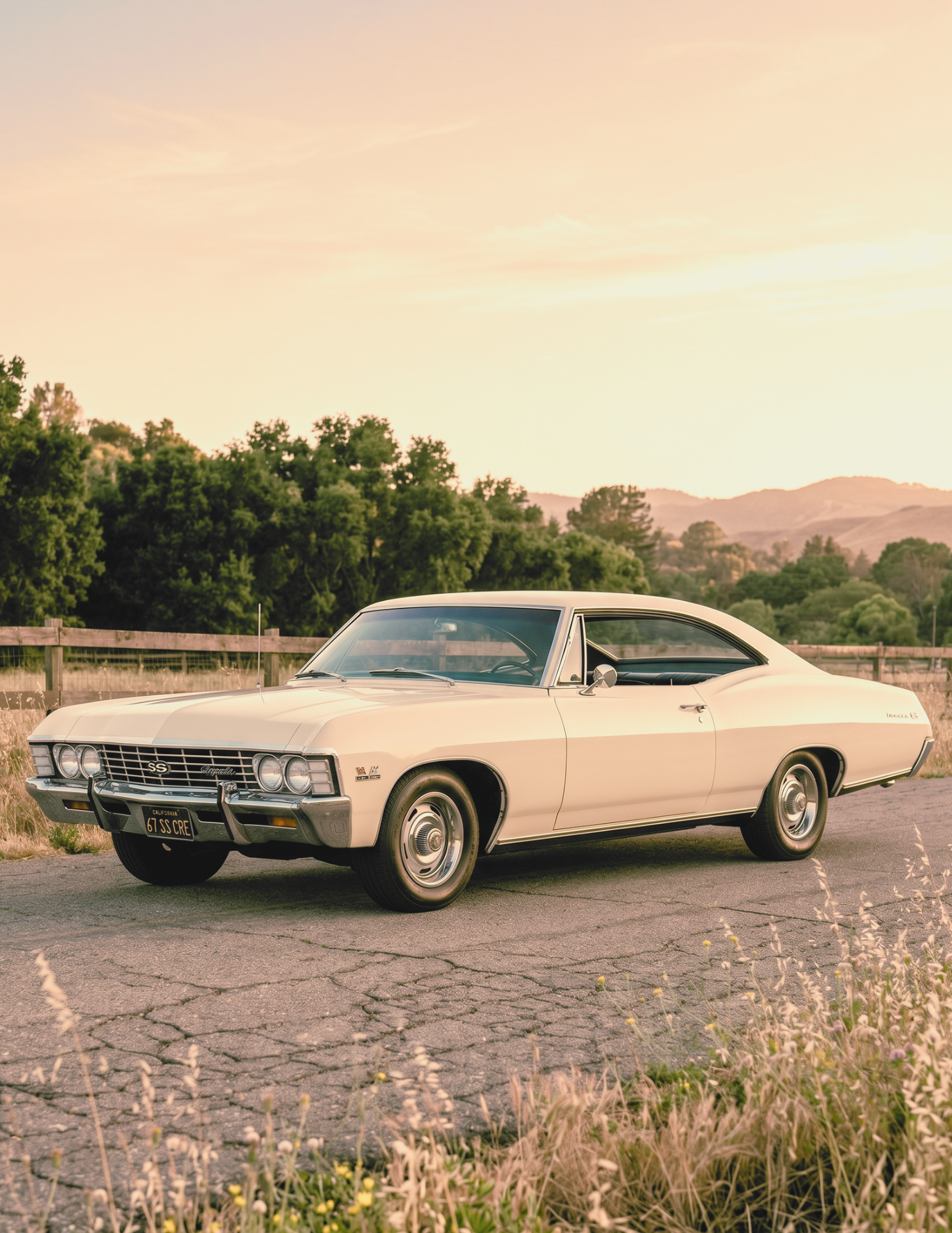
My first eBay vehicle purchase was a 1967 Impala Super Sport. The car was in Ohio. Rodney and I drove out with a tow dolly to go pick it up. We had almost no idea what we were getting. The listing photo was low quality, and the car was an off-white cream color, making it incredibly hard to judge. Nonetheless, we were confident it was a real Super Sport, which should be worth a lot more than my $4,400 winning bid (practically my life savings).
When the seller rolled it out of his garage, we couldn't believe it. The car was impeccable. This was an $8,000 car, not a $4,000 car. It could have gone the other direction just as easily. The paint could have been shot, the body rough, the interior in need of new upholstery. We never would have known from the photos. By buying it for $4,400, we had a margin of safety. We could have painted it and still done well. Instead, we did very well.
The reason I'm telling you this story is actually to tell you about the ride home.
On the drive back, towing the Impala behind the truck, I felt something odd through the steering wheel. I told Rodney we had to pull over. Sure enough: flat tire, rear right. We swapped in the spare, found a place to get the tire patched, and we were on our way. A detour, but no big deal. Just another adventure, as Rodney liked to say. It was his way of saying that surprises are part of the deal, not a reason to abandon it.
We also had the other kind of adventure on that trip — the kind that actually impairs value. We were navigating a parking lot with the car on the dolly. Tight maneuver, bad angle. I dented the front quarter-panel of the Impala. Unlike the flat tire, which was a delay, this was real damage. It changed the intrinsic value of the car. We had bought it right, so the damage wasn't catastrophic to the investment, but the impairment was real.
Two types of adverse adventures. Detours, which slow you down but don't change where you're going or what you own, like flat tires. And damage, which actually impairs value and requires a reassessment of the plan.
In the first quarter, Harrow, our largest position in both partnerships, sold off nearly 40%, peak to trough. As concentrated, long-duration investors, this is the most important question we face when it happens:
Is this a detour, or is this damage? Has something changed in the intrinsic value of the business — or has only the price changed?
Charlie Munger once said: "If you're not willing to react with equanimity to a market price decline of 50% two or three times a century, you're not fit to be a common shareholder and you deserve the mediocre result you're going to get." Rodney would have put it differently. He would have called it an adventure. To me it means the same thing: the ability to endure the adventures is what separates investors who compound from those who don't.
Jason and I walk through the answer, position by position, in the TMCP and TMHP portfolio updates in the full letter. But I will tell you now what I believe: this is a detour. Harrow is the same business it was at the beginning of the quarter. The competitive position has not deteriorated. The unit economics have not changed. What changed is the price. And price, as our Partners know, is what you pay. Value is what you get.
We bought this position right and were able to add to it when it sold off. And just like that Impala in Ohio, buying right provides margin of safety to absorb the adventures along the way — flat tires and dents alike. Jason and I like to say, the journey is the destination. It's on the wall in our office. All journeys are filled with adventures, good and bad. How we handle the adverse ones determines the success or failure of the journey.
If you share our temperament and long-term perspective, we invite you to consider joining us as a Partner.
— Mike
The full letter
The complete Q1 letter — performance, portfolio updates, and current positioning for both Top Mark Capital Partners (TMCP) and Top Mark Health Partners (TMHP), with full disclosures.
Read the full Q1 letter (PDF)Considering becoming a Partner?
Our next contribution window opens July 1. We add Partners slowly — through shared thinking with people who invest on the same timescale we do.
Top Mark Capital Partners and Top Mark Health Partners are offered only to investors who are both accredited and qualified clients — a higher standard that applies because the partnerships charge a performance fee. We take reasonable steps to verify accredited status before any investment.
Start a conversation
This page is an advertisement for Top Mark Capital and a solicitation of interest in a private offering conducted under Rule 506(c) of Regulation D, intended only for accredited investors who are also qualified clients. Top Mark Capital Partners (TMCP) and Top Mark Health Partners (TMHP) charge a performance fee, so investors must meet the SEC's qualified-client standard in addition to being accredited; the firm takes reasonable steps to verify accredited status before accepting any investment, and no subscription will be accepted prior to completion of that verification. This page is not personalized investment advice and is not an offer or sale in any jurisdiction where such offer or sale would be unlawful. Any performance referenced is historical and described more fully, with required disclosures, in the full letter. Past performance does not guarantee future results. All investing involves risk, including the possible loss of principal. Performance is presented in accordance with the SEC Marketing Rule (Rule 206(4)-1). Registration with the SEC does not imply a certain level of skill or training. See topmarkcapital.com/terms.
Top Mark Capital Management, 416 13th St, Suite 200, San Diego, CA 92101 · (646) 470-3016